40 Bible Passages About AI: Scripture for an Age of Intelligent Machines
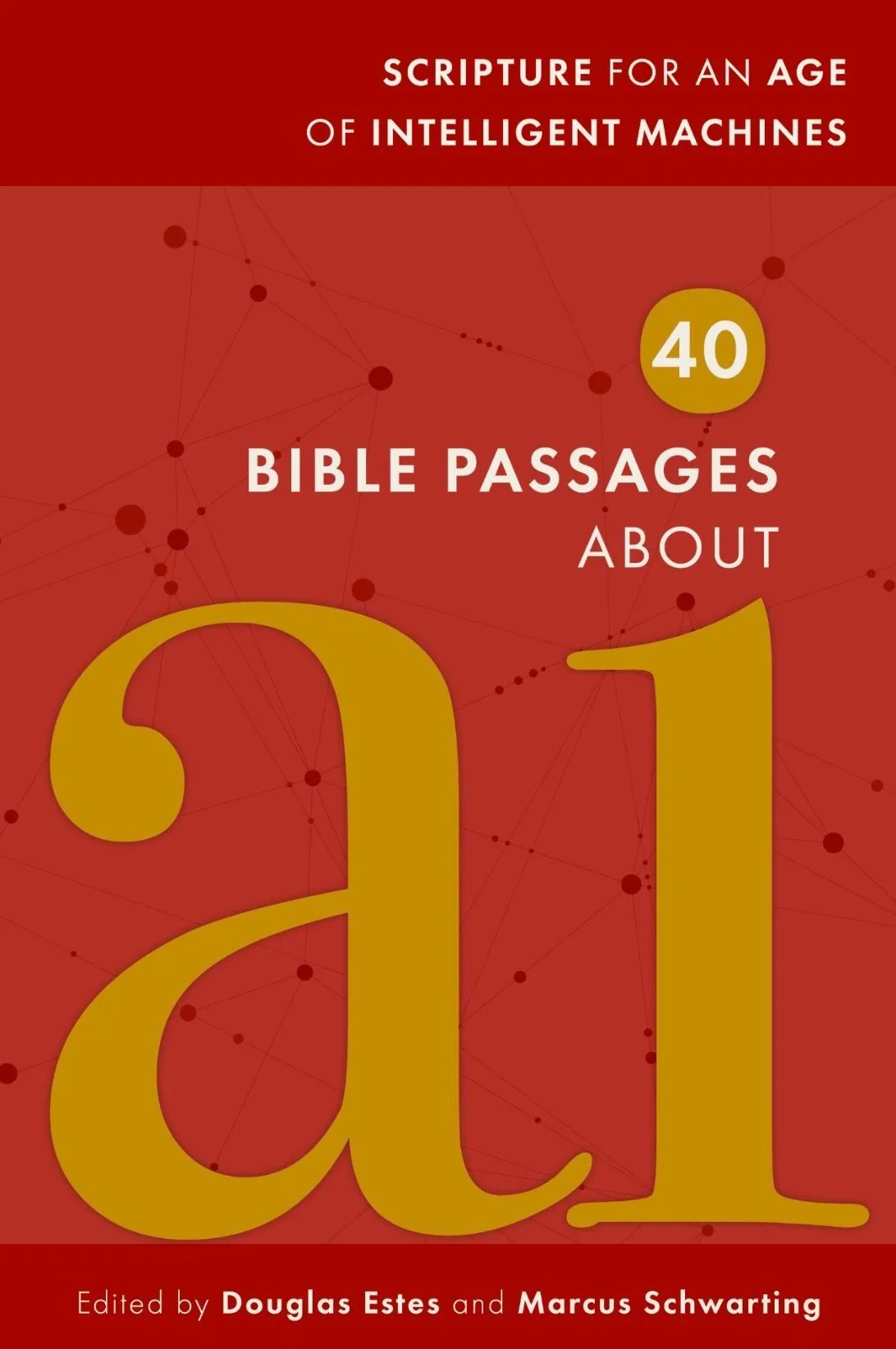
40 Bible Passages About AI: Scripture for an Age of Intelligent Machines released in August 2026, and I wrote two of the chapters.
Chapter 25 is on 1 Thessalonians 5:19-22, where Paul tells the church to test everything and hold on to what is good. What does that look like in practice when the tool in question is a language model?
Chapter 26 is on Hebrews 4:12-13. Hebrews already talks about a people wandering in the wilderness, and I take that as a question about how we survive the digital one.
Douglas Estes and Marcus Schwarting edited the book, and over twenty of us contributed. We picked passages that shine light on AI and what Scripture actually says about it. Each of the forty passages gets a short essay on why it matters right now, which means you can skip around and read whatever passage interests you. It's built as a reference for pastors, church leaders, and educators. Grab it on Amazon or from Friendship Press.
All 40 Bible Passages About AI in the Book
Here is the full table of contents, so you can see which passages the book covers and who wrote each chapter. My two are marked. Jump to the contributor list or where to buy it.
Part 1: AI and the Nature of God
- Exodus 3:1–15: Moses at the Prompt by Clint Schnekloth
- 1 Samuel 17:1–11, 31–49: Artificial Intelligence and Saul’s Armor by James Spencer
- 1 Kings 19:1–18: The Sound of Sheer Silence by R. Daren Erisman
- Mark 7:31–37: Ephphatha: Openness and AI by Bart J. Koet with Douglas Estes
- John 1:1–13: Many Words Make Many Worlds, But Only One Makes Truth by J. David Stark
Part 2: AI and the Nature of Humanity
- Genesis 1:26–28: Made in Whose Image? by Drew Dickens
- Genesis 2:4–17: Work in Creation by Todd Korpi
- Genesis 2:18–25: Why Human Relationship Is Needed Despite the Rise of AI by Akosua Frempong
- Psalm 8:1–9: What Is Man? Placing AI within God’s Created Hierarchy, and Responding Righteously by Jacob Shatzer
- Ecclesiastes 3:9–22: AI and Working “Under the Sun” by John Anthony Dunne
- Matthew 25:14–30: The Parable of the Talents by Marcus Schwarting
- John 5:41–44: AI: Vestibule to Vainglory by Ed Gerber
- 1 Corinthians 8:4–6: Artificial Intelligence Models Are Tools, Not Oracles by J. David Stark
- 1 Corinthians 15:12–20, 35–58: Embodiment and AI by Nathan Barczi
- Colossians 2:1–5: Paul and the Shape of Mediated Presence by Clint Schnekloth
Part 3: AI and Wisdom
- Exodus 18:13–23: Jethro’s Advice to Moses by Brian Sigmon
- Exodus 20:1–17: The Ten Commandments and AI by Andrew Witt
- 1 Kings 3:1–15: The Listening Heart: Discernment in an Age of Intelligent Tools by Ken M. Penner
- Psalm 1:1–6: Our Lives and the Lives of Those Around Us by Andrew Witt
- Proverbs 1:1–7: The Beginning of Wisdom by Nicole L. Tilford
- Proverbs 4:1–9: An Ongoing Test of Wisdom by S. Joshua Swamidass
- Ecclesiastes 1:3–11: There Is Nothing New under the Sun by Nicole L. Tilford
- Luke 2:41–52: Normal Human Growth by John Dyer
- Philippians 3:10–16: Best, Not Better by Ed Gerber
- 1 Thessalonians 5:19–22: Test Everything by Jay KrandaMy chapter
- Hebrews 4:12–13: The Digital Wilderness by Jay KrandaMy chapter
- 1 John 4:1–6: Testing the Spirits by James F. McGrath
Part 4: AI and Ethics
- Exodus 21:28–36: Responsibility in an Age of AI by Marcus Schwarting
- Deuteronomy 22:8: The Ethical Responsibility of Makers by John Dyer
- Psalm 115:1–18: When Voiceless Idols Speak: Inspiration and Companionship in the Age of AI by Andrew J. Byers
- Hebrews 11:1–3: When What You See Isn’t What You Get by Carey Nieuwhof
Part 5: AI and Personal Values
- Genesis 11:1–9: Babel, Artificial Intelligence, and the Temptation of Self-Sufficiency by James Spencer
- Exodus 31:1–11: Bezalel and Oholiab by Brian Sigmon
- Isaiah 44:9–20: The Worship of AI: A Double Tragedy by Nathan Barczi
- John 3:25–30: He Must Increase, but I Must Decrease by A. Trevor Sutton
- Colossians 3:23–25: Presence in Our Work by Todd Korpi
Part 6: AI and the Future
- Daniel 12:1–4: The Sealed Scroll and the Search Engine by Drew Dickens
- 2 Peter 3:3–13: AI at the End of Time by Douglas Estes
- Revelation 7:9–17: From Any Nation: Artificial Intelligence and Good News for the Great Crowd of the Lamb by Melanie Dzugan
- Revelation 22:16–21: AI and the Antichrist by Douglas Estes
Who Wrote the Book: The 26 Contributors
Two editors and twenty four writers, a mix of pastors, seminary professors, computer scientists, and a physician. One line on each, pulled from the contributor pages in the back of the book.
- Nathan Barczi
- MIT chaplain and senior theologian at the Octet Collaborative, with a PhD in theology from Nottingham and a PhD in economics from MIT. (chapters 14 and 34)
- Andrew J. Byers
- Tutor in New Testament at Ridley Hall, Cambridge, and author of TheoMedia: The Media of God in the Digital Age. (chapter 30)
- Drew Dickens
- Host of the AI & Spirituality podcast and former Director of Content for Abide, with a doctorate from Southern Methodist University. (chapters 6 and 37)
- John Anthony Dunne
- Associate Professor of New Testament at Bethel Seminary in St. Paul, Minnesota, focused on Paul, Christian origins, and second temple Judaism. (chapter 10)
- John Dyer
- Vice President at Dallas Theological Seminary and author of From the Garden to the City and People of the Screen. (chapters 23 and 29)
- Melanie Dzugan
- Adjunct professor at John Brown University finishing a Fuller Seminary PhD in theology with a focus on Christian ethics. (chapter 39)
- R. Daren Erisman
- Assistant Professor of Computer Science at Minot State University and an ordained Lutheran minister with a doctorate in theology. (chapter 3)
- Douglas Estes
- Coeditor of the book, Associate Professor of Religion at New College of Florida, and author of SimChurch and Artificial Intelligence for Bible Translation and Interpretation. (chapters 4, 38, and 40)
- Akosua Frempong
- Founder of Listening Ear Communications and adjunct professor at Regent University who trains Christian publishers on AI and its ethics. (chapter 8)
- Ed Gerber
- University Chaplain and Director of Campus Ministries at Trinity Western University in British Columbia and a senior fellow with the Centre for Pastor Theologians. (chapters 12 and 24)
- Jay Kranda
- Innovative Tech Pastor at Saddleback Church and author of Online Church Is Not the Answer. (chapters 25 and 26)
- Bart J. Koet
- Professor of New Testament and early Christian literature at the Tilburg School of Catholic Theology in the Netherlands. (chapter 4)
- Todd Korpi
- Missiologist in Residence at OneHope, director of the Digital Mission Consortia at the Wheaton College Billy Graham Center, and author of AI Goes to Church. (chapters 7 and 36)
- James F. McGrath
- Clarence L. Goodwin Professor of New Testament at Butler University and coauthor of Real Intelligence: Teaching in the Era of Generative AI. (chapter 27)
- Carey Nieuwhof
- Bestselling author, pastor, and host of The Carey Nieuwhof Leadership Podcast, with AI and the Future Church forthcoming. (chapter 31)
- Ken M. Penner
- Professor of Religious Studies at St. Francis Xavier University in Nova Scotia who applies digital methods to ancient Jewish texts. (chapter 18)
- Clint Schnekloth
- Pastor of Good Shepherd Lutheran Church in Fayetteville, Arkansas, and author of Mediating Faith: Faith Formation in a Transmedia Era. (chapters 1 and 15)
- Marcus Schwarting
- Coeditor of the book, senior editor of AI and Faith, and an AI researcher at SUNY Buffalo with a computer science PhD from the University of Chicago. (chapters 11 and 28)
- Jacob Shatzer
- Theologian, author, and Provost and Vice President of Academic Affairs at Union University. (chapter 9)
- Brian Sigmon
- CEO of Friendship Press, which manages the NRSVue and RSV translations, and author of the 2023 novella MessiahBot. (chapters 16 and 33)
- James Spencer
- President of the D. L. Moody Center, host of the Thinking Christian podcast, and adjunct instructor at Wheaton College. (chapters 2 and 32)
- J. David Stark
- Professor of Biblical Studies at Faulkner University and Senior Research Fellow at the Kirby Laing Centre for Public Theology in Cambridge. (chapters 5 and 13)
- A. Trevor Sutton
- Senior pastor of St. Luke Lutheran Church in Lansing, Michigan, professor of theology at Concordia University Irvine, and author of several books on technology. (chapter 35)
- S. Joshua Swamidass
- Physician and scientist at Washington University in St. Louis and author of The Genealogical Adam and Eve. (chapter 21)
- Nicole L. Tilford
- Independent scholar in Atlanta and coeditor of Biblical Themes in Science Fiction. (chapters 20 and 22)
- Andrew Witt
- Associate Professor of Biblical Studies and Theology at Tyndale University in Toronto, with research centered on the Psalms. (chapters 17 and 19)
Where to Get 40 Bible Passages About AI
Paperback and Kindle. Published by Friendship Press, August 2026. ISBN 978-1961088474.
Buy on AmazonBuy from Friendship Press
Common Questions
- Does the Bible say anything about artificial intelligence?
- Not by name. The book’s premise is that Scripture speaks to the questions AI raises: what it means to be made in God’s image, how to test what is good, who is responsible for what we build, and where history is headed. Each of the 40 chapters starts from a passage and works toward the AI question, not the other way around.
- Who is the book for?
- Pastors, church leaders, teachers, and small group leaders who want a scriptural starting point for conversations about AI. The chapters are short and stand alone, so it works as a reference or a 40 day reading plan.
- How is it organized?
- Six parts: the nature of God, the nature of humanity, wisdom, ethics, personal values, and the future. Each passage gets a short essay on why it matters right now, plus notes and a scripture and subject index.
- Which chapters did Jay Kranda write?
- Chapter 25 on 1 Thessalonians 5:19–22 (Test Everything) and chapter 26 on Hebrews 4:12–13 (The Digital Wilderness).