The Digital Pullback Is a Fear Response
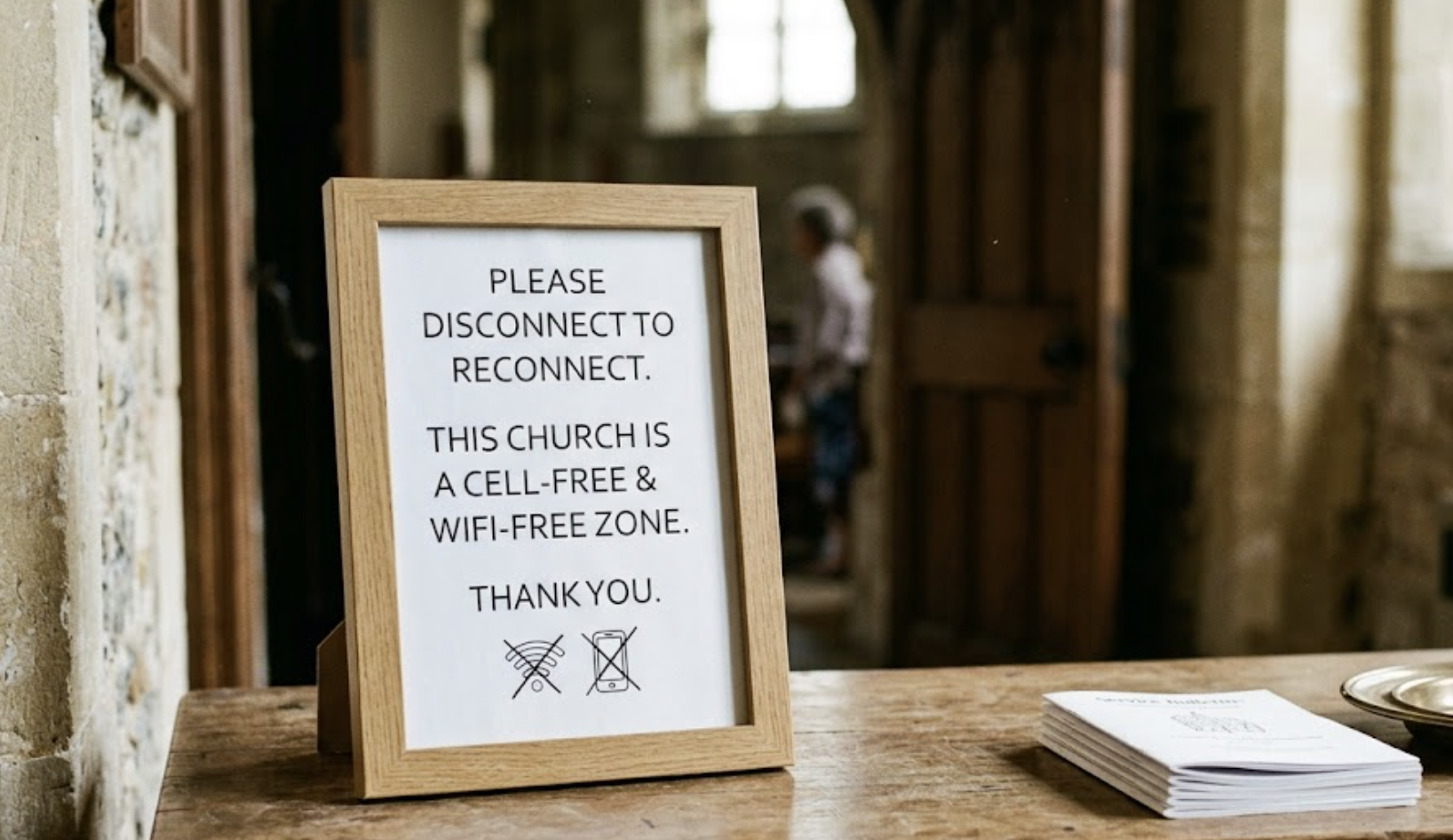
The digital pullback is happening, and it's been happening for a while. Churches are once again so fixated on in-person attendance that they've started treating their own digital offerings as a threat, as if a livestream is the reason a seat sits empty. So they add friction. They quietly limit the stream, make more and more things available only if you show up in person, and lean hard into paper experiences. The goal is simple. Make sure people have no choice but to walk through the door.
This is a post-COVID hangover. For a season, people were oversaturated with digital church, and when the buildings reopened, some congregations watched their attendance dip. The instinctive fix has been to pull the ladder up behind them, to treat everything that happened online as the problem rather than as a tool that got overused for a while.
The Moral Licensing Trap
Malcolm Gladwell has an idea worth sitting with here: moral licensing. He unpacks it in the first episode of Revisionist History, "The Lady Vanishes." The story centers on Julia Gillard, Australia's first female prime minister. Her rise didn't open the door for women the way everyone assumed it would. She faced intense, gendered hostility, and the "first" ended up being treated as a token rather than a turning point. Getting one woman into the role gave the culture permission to feel like the work was done, and then to stop.
I think something similar has happened with digital in the church. Leaders tried it during one of the strangest seasons in church history, and that season has handed them a kind of digital licensing: "We already tried it. It's not for us." They get to feel like the question is settled.
It's the same move people make with Zoom. Plenty of people will tell you they hate Zoom, and then use it all the time whenever it's actually convenient. You can have a bad taste in your mouth about something while it's quietly still serving you well. No, not everything should be on Zoom. But be honest. Not everything you do in a day, a week, or a month requires every single person in the same room. The people loudest about how terrible Zoom is are often the least self-aware about how much it's helping them hit their own objectives. That's the licensing at work. They slam it instead of noticing it's working.
This Isn't Every Church, But the Fear Is Real
I want to be clear that this isn't all churches. It's an undertone I've picked up talking with church leaders over the last twelve months. And to be fair, adding friction to a process can be exactly the right call depending on your objectives. I have a whole chapter in my book on this. But the friction I'm watching get added right now feels less like strategy and more like fear.
Here's what gives it away: the scarcity mindset around engagement, treating every online interaction as one stolen from the seats on Sunday, as if in-person and online are fighting over the same limited pool of attendance. Let me say this plainly. Your in-person offering should be dramatically better than your online experience. It shouldn't even be close. And if you're genuinely afraid that people will stay home and watch the stream instead of coming in, that fear is telling you something. Not about digital, but about what you're actually offering in the room.
Here's what the scarcity mindset misses entirely. A strong online presence isn't a leak in the bucket, it's the front door. It reaches and engages people you'd never touch otherwise, and a good chunk of them eventually walk through the physical doors because of it. It also extends your reach to the "back row" crowd, the people who, in another timeline, would have quietly drifted off and stopped attending altogether. A season of travel, a stretch of Sundays with sick kids, a hard year that makes walking in feel like too much. Without an online option, those people are simply gone. With online, you keep them on the hook, still connected, still counted, and far more likely to re-engage and come back in person when life settles. Online done well doesn't split the pie. It grows it.
Think about it. I don't watch a concert on YouTube and decide it beats being there. I don't watch a vlogger wander around Disneyland and think it actually tops being there. Nobody does. But some churches are operating as if the recording could out-compete the real thing, so they pull back what they do online to protect the room. If the room needs that kind of protection, the room is the problem.
The Future Is Hybrid
The present and the future are hybrid. We need to lean into these offerings to build a better overall experience for everyone, because here's the reality most pullback strategies miss. The people who show up every single week also want the digital stuff. They want the paper card, someone to save their seat, to catch the stream while they're traveling, and to be known through your app. It's a both/and, not an either/or.
Don't let a hard season convince you that everything you built online was a mistake. Keep adding friction where it genuinely serves your objectives. But please stop adding it out of fear that a digital experience will empty your building. It won't. Fear will.