

Sliding Scale of Online Offline Engagement
Not all engagement is the same, and that's okay. The unwise thing is equating commitments. Someone who walks forward in a service publicly to say they committed their life to Christ is more engaged compared to a person who liked a post on Instagram. The like is still relevant, but not equal to the altar call. You have to think about engagement in terms of good to best on a sliding scale. A person who is sitting in your worship center on a Sunday morning is more engaged than someone watching at home. The person at your church had to get dressed, maybe wrangle up their kids, and get through traffic. Now, that doesn't mean the online watcher isn't engaged or doesn't have valid reasons for watching online, but let's not equate the commitment levels. A comparable commitment experience to sitting in your church for online watchers are those who host an in-home worship service. These online watchers had to get dressed, wrangle up the kids, but instead of traffic, pick up their house. I would say hosting church in your own home is more engaged than those who are only keeping a seat warm. Understanding the sliding scale of engagement is an important principle when processing the value of online engagement to your local church's goals.

Leaky Funnel
You're trained in seminary and throughout your internship as a pastor never to send people away. A person comes into your doors, and our job is to keep them connected to the church. After that first modem came online, the game changed. People could tune in from anywhere in the world. The online attendee isn't just down the street. Your reachable audience is broader, which means your methodology needs a good old fashion upgrade. Unfortunately, most seminaries are still operating on those AOL CDs.

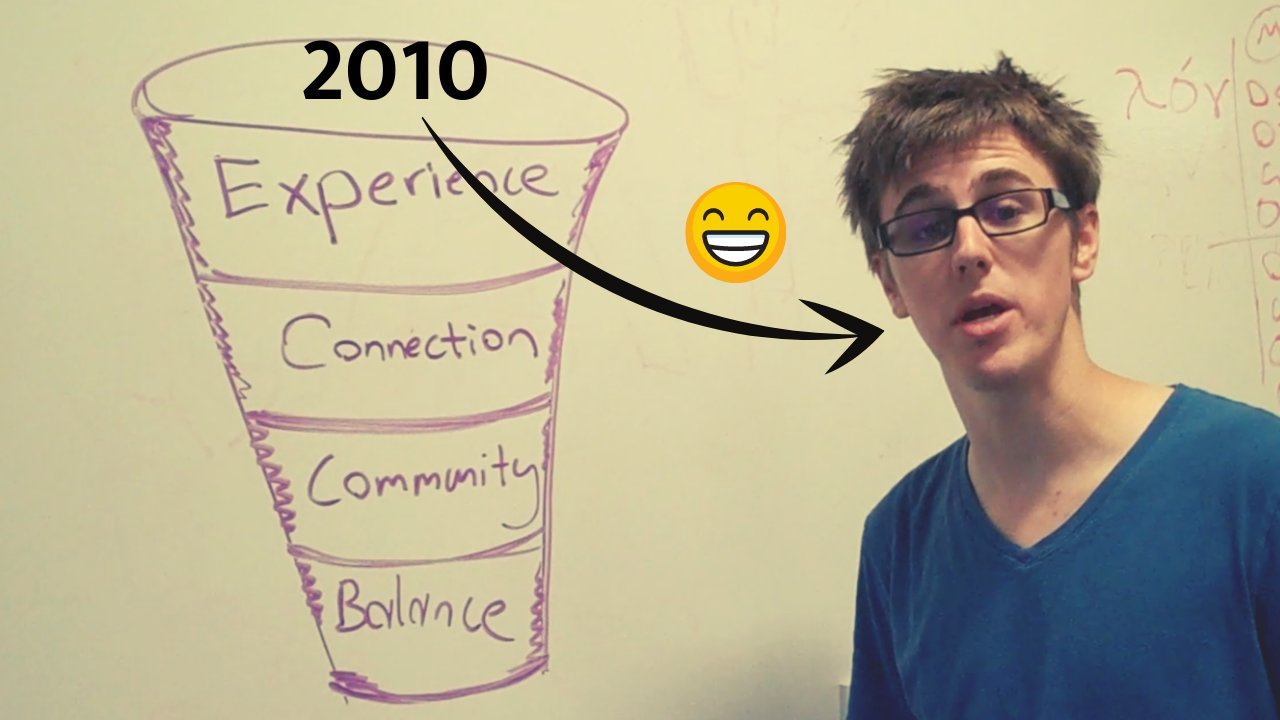
Visualizing Turning an Online Watcher to Attending In-Person Process
Below is the process of how we move an online watcher on Facebook, YouTube, or our Online Campus page into face to face community and the critical platforms and tools to accomplish our vision.

The Gap with Online Church
I mentioned these two examples because friction can enable and disable the expansion of an idea. The internet has amplified many great things, but this new frontier has introduced further questions. For churches, the lack of friction encouraged ministries to start streaming their services regularly with very little critical thinking about the broader strategy of online. The shift happened in 2016 because Facebook Live became a free feature to anyone with a Facebook page and most churches jumped on the opportunity.
Featured Resources
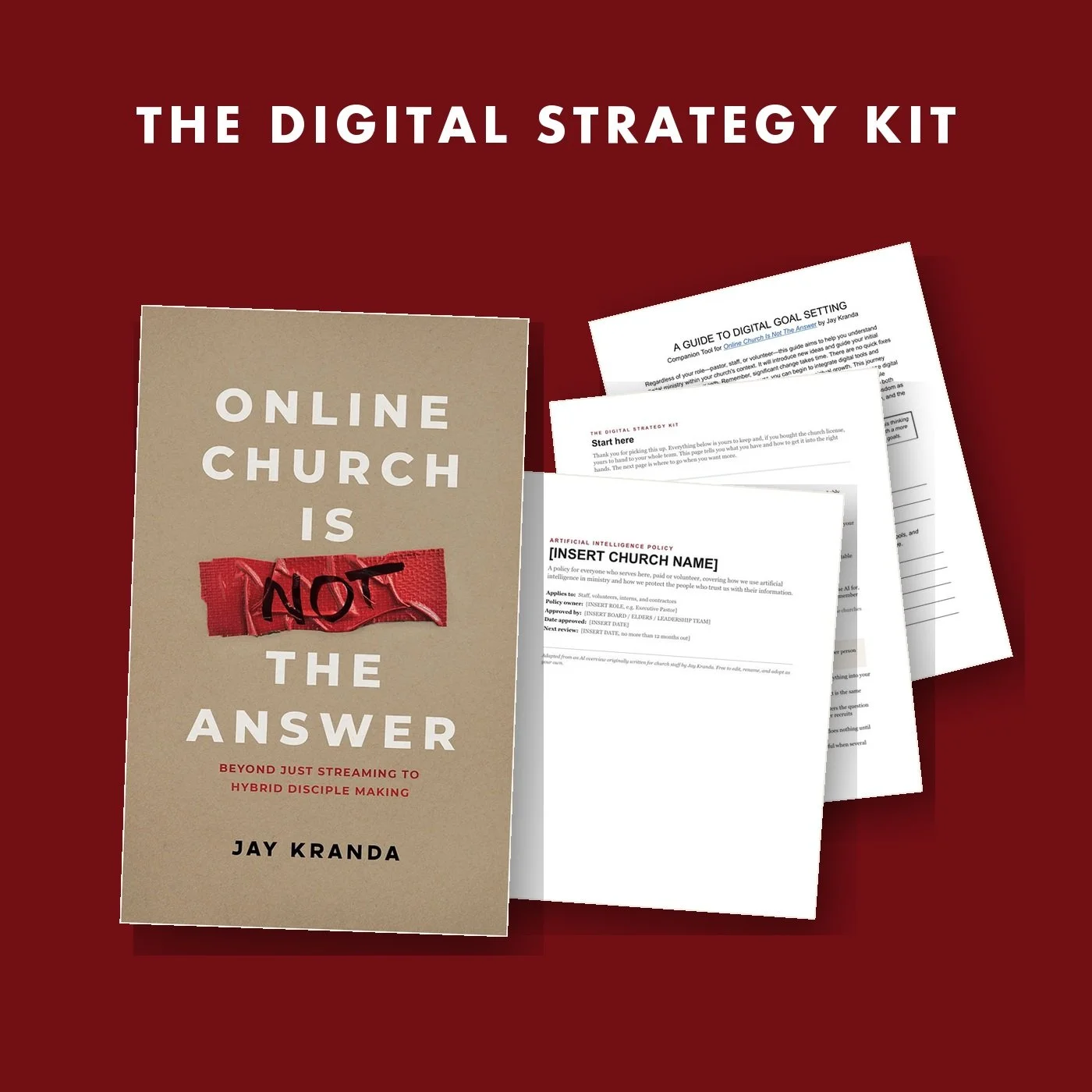
The same four things, licensed for one reader. If you are buying this for a team, the Church License covers your entire staff and every volunteer for about the cost of three copies.
What you get:
Online Church Is Not the Answer, the full book as a PDF. 227 pages, 15 chapters, each one ending in a big idea you can put in front of your team.
The complete audiobook in MP3. 5 hours 28 minutes, read by Jay.
A Guide to Digital Goal Setting and Online Ministry Planning, including the team assessment.
The Church AI Policy Template, an editable policy your board can approve. What staff and volunteers can and cannot use AI for, when it has to be disclosed, where the line sits in sermon prep and pastoral care, and how member data gets handled.
Read three chapters. If you do not walk away with at least one thing you can change this season, reply to your receipt and I will refund you. Keep the files either way.
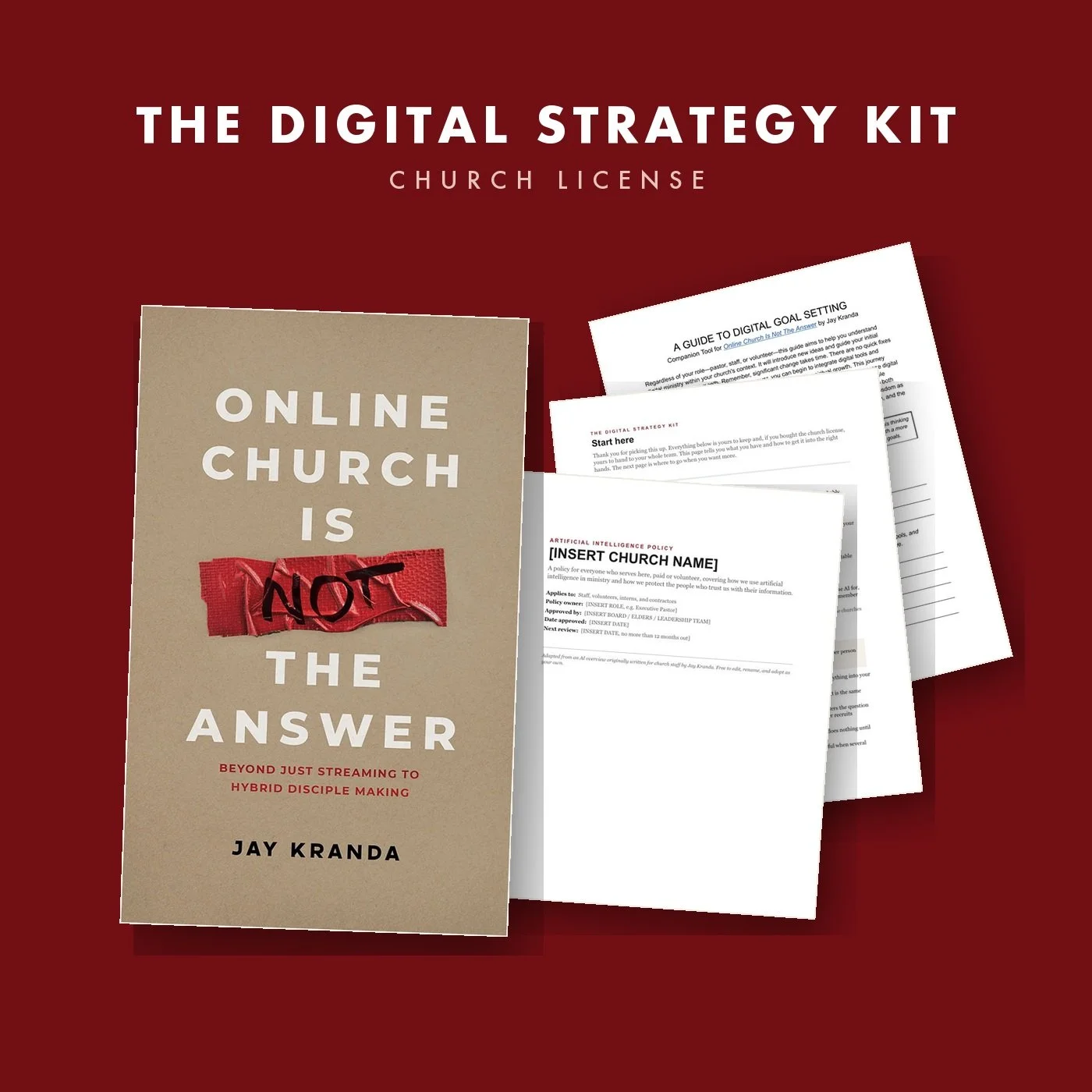
Everything in the Digital Strategy Kit, licensed for your entire staff and every volunteer on your team. No seat counting and no per person pricing. Buy it once, download the files, and send them to everybody.
What you get:
Online Church Is Not the Answer, the full book as a PDF. 227 pages, 15 chapters, each one ending in a big idea you can put in front of your team.
The complete audiobook in MP3. 5 hours 28 minutes, read by Jay.
A Guide to Digital Goal Setting and Online Ministry Planning, including the team assessment.
The Church AI Policy Template, an editable policy your board can approve. What staff and volunteers can and cannot use AI for, when it has to be disclosed, where the line sits in sermon prep and pastoral care, and how member data gets handled.
Read three chapters. If you do not walk away with at least one thing your team can change this season, reply to your receipt and I will refund you. Keep the files either way.
Overview of Book: Digital is a confusing concept, and many churches struggle to understand it, with most limiting their digital experience to streaming their church services and nothing more. In this book, you’ll learn how to think strategically about digital strategy and how to best integrate digital ideas into your church that align with your ministry’s in-person objectives. The goal is to disciple more people and not just get an online audience. Readers of this book will learn to cut through the hype and discern the most critical, high-level concepts and find practical ideas they can implement in their church. You’ll walk away with a vision and a pathway to take your church’s digital strategy to the next level and beyond just streaming a church service.