
The Gap with Online Church
I mentioned these two examples because friction can enable and disable the expansion of an idea. The internet has amplified many great things, but this new frontier has introduced further questions. For churches, the lack of friction encouraged ministries to start streaming their services regularly with very little critical thinking about the broader strategy of online. The shift happened in 2016 because Facebook Live became a free feature to anyone with a Facebook page and most churches jumped on the opportunity.

Think 3 Not 1
You’re trained from seminary to the cemetery to preach to the bodies in the building. After the service is over and lunch in the belly the message has faded into the distance, but the internet has changed the game. Unfortunately, seminaries haven’t adjusted yet. You no longer have one intended audience, but three audiences.

Countering Your Church’s Lack of Vision Online. No Whining.
Your church’s leadership wants to know people watching online will be cared for correctly. Those seat warmers on big boards monitoring all the vitals of the bride do care about everyone attending locally and possibly tuning in online. The barrier of embracing an online ministry usually comes down to trusting you, the online pastor or potential online pastor.

The Truth is #ChurchOnline Amplifies What You're Already Doing
Your online church will either amplify an existing well-executed strategy or highlight widespread issues. It won’t magically fix your church’s problems. If your church knows how to attract younger people then your online ministry will attract younger people. If your church is good at small groups then your online small group strategy will work. If your church is great at getting people to fill out response cards then your weekly digital response card submissions will be high. If your online ministry doesn’t grow most likely your church is lacking in evangelistic outreach.

Why I Cringe When People Say "Internet Church Isn’t Really Church"
All I can think about is the fallacy of equivocation when someone says an online church isn’t church. A great example of this argument is in a recent NY Times opinion piece where the headline was "Internet Church Isn’t Really Church.”

Online Ministry: Bringing Relational Healing For Those With Mental Health Struggles
Mental health for me often feels like a rabbit hole of a topic. How mental health is medically classified confuses me, how people get diagnosed is not clear, and treatment can be messy. I believe online ministries can offer hope not only through Jesus, but through relational restoration by inviting them to join the community of a church’s online experience.
Featured Resources
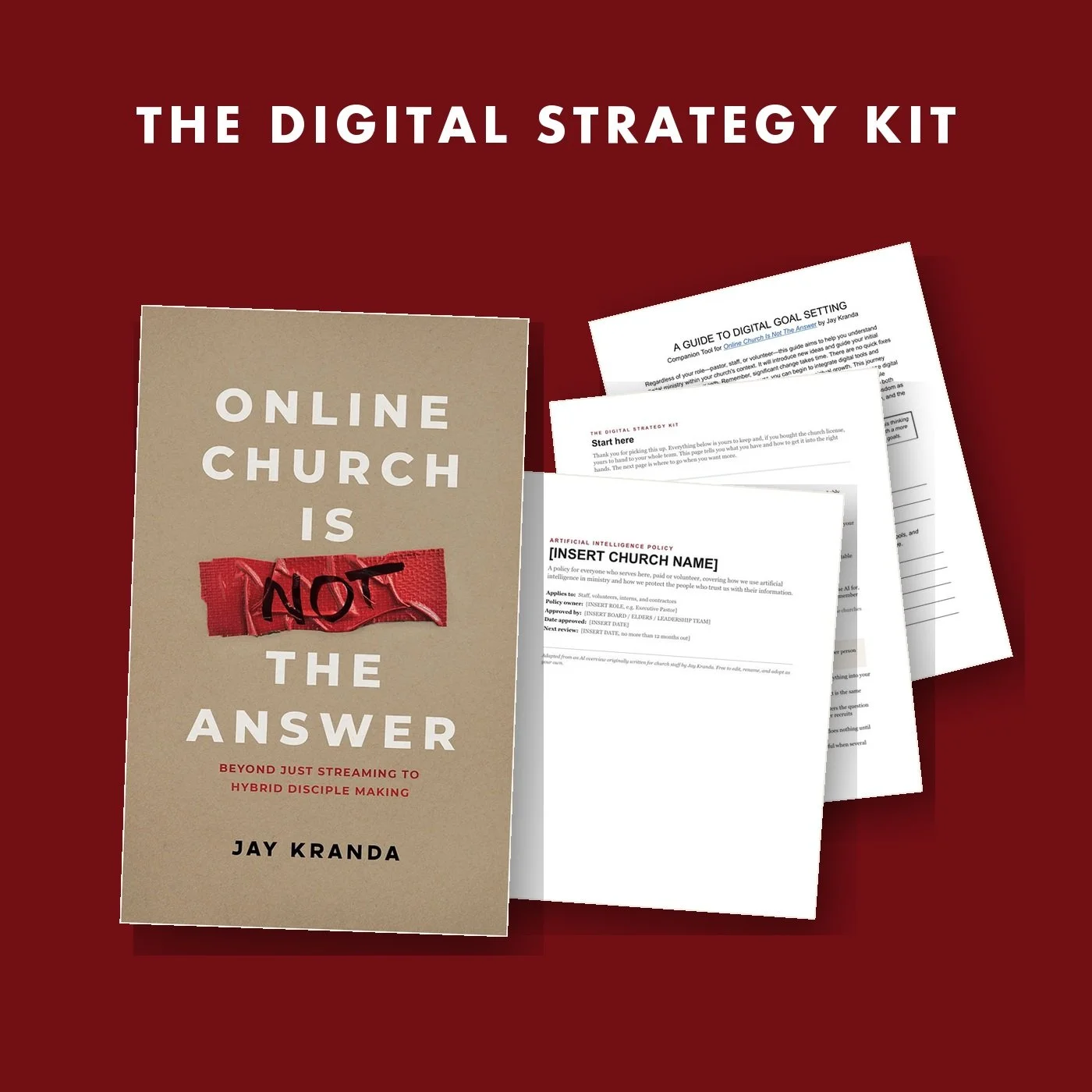
The same four things, licensed for one reader. If you are buying this for a team, the Church License covers your entire staff and every volunteer for less than the cost of three copies.
What you get:
Online Church Is Not the Answer, the full book as a PDF. 227 pages, 15 chapters, each one ending in a big idea you can put in front of your team.
The complete audiobook in MP3. 5 hours 28 minutes, read by Jay.
A Guide to Digital Goal Setting and Online Ministry Planning, including the team assessment.
The Church AI Policy Template, an editable policy your board can approve. What staff and volunteers can and cannot use AI for, when it has to be disclosed, where the line sits in sermon prep and pastoral care, and how member data gets handled.
Read three chapters. If you do not walk away with at least one thing you can change this season, reply to your receipt and I will refund you. Keep the files either way.
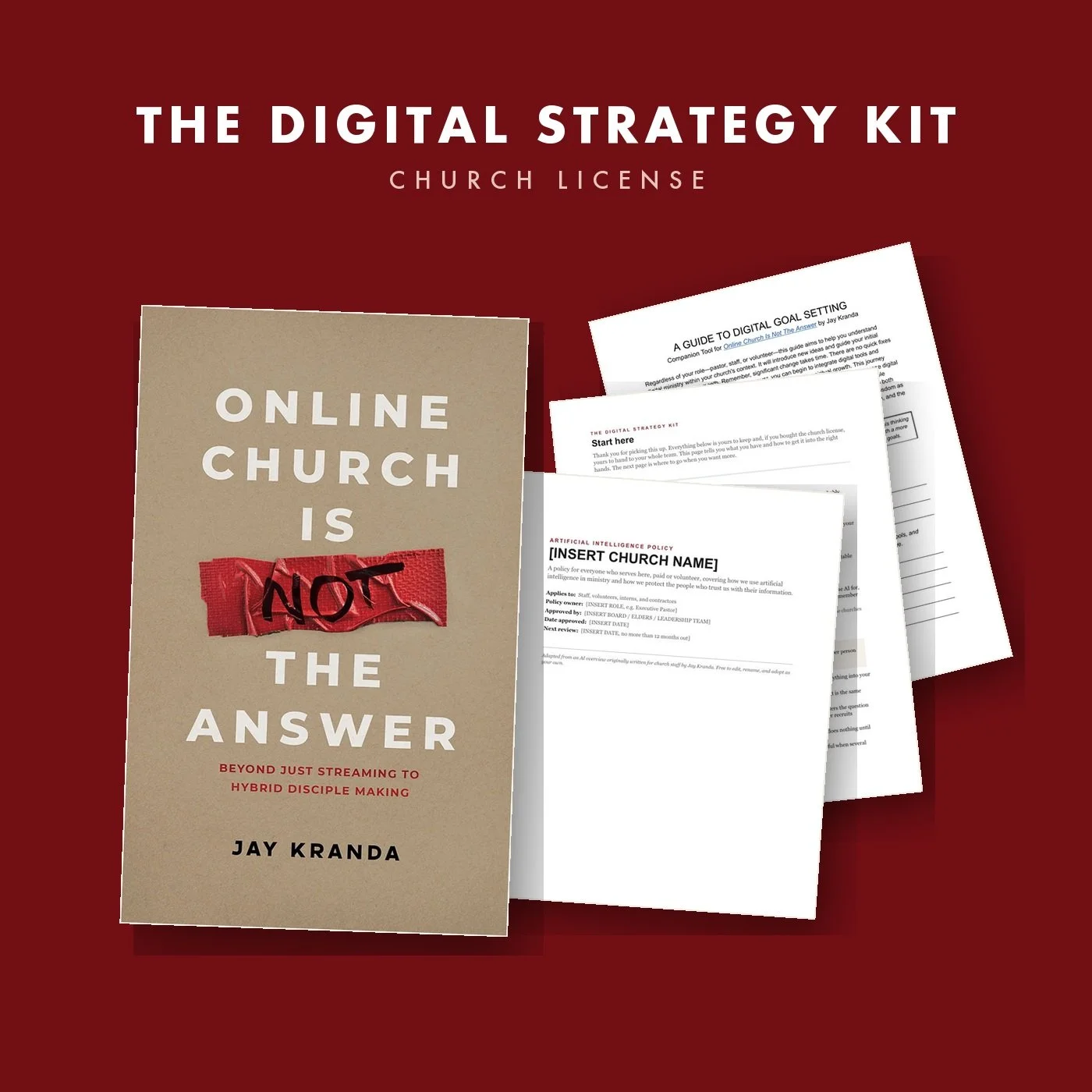
Everything in the Digital Strategy Kit, licensed for your entire staff and every volunteer on your team. No seat counting and no per person pricing. Buy it once, download the files, and send them to everybody.
What you get:
Online Church Is Not the Answer, the full book as a PDF. 227 pages, 15 chapters, each one ending in a big idea you can put in front of your team.
The complete audiobook in MP3. 5 hours 28 minutes, read by Jay.
A Guide to Digital Goal Setting and Online Ministry Planning, including the team assessment.
The Church AI Policy Template, an editable policy your board can approve. What staff and volunteers can and cannot use AI for, when it has to be disclosed, where the line sits in sermon prep and pastoral care, and how member data gets handled.
Read three chapters. If you do not walk away with at least one thing your team can change this season, reply to your receipt and I will refund you. Keep the files either way.
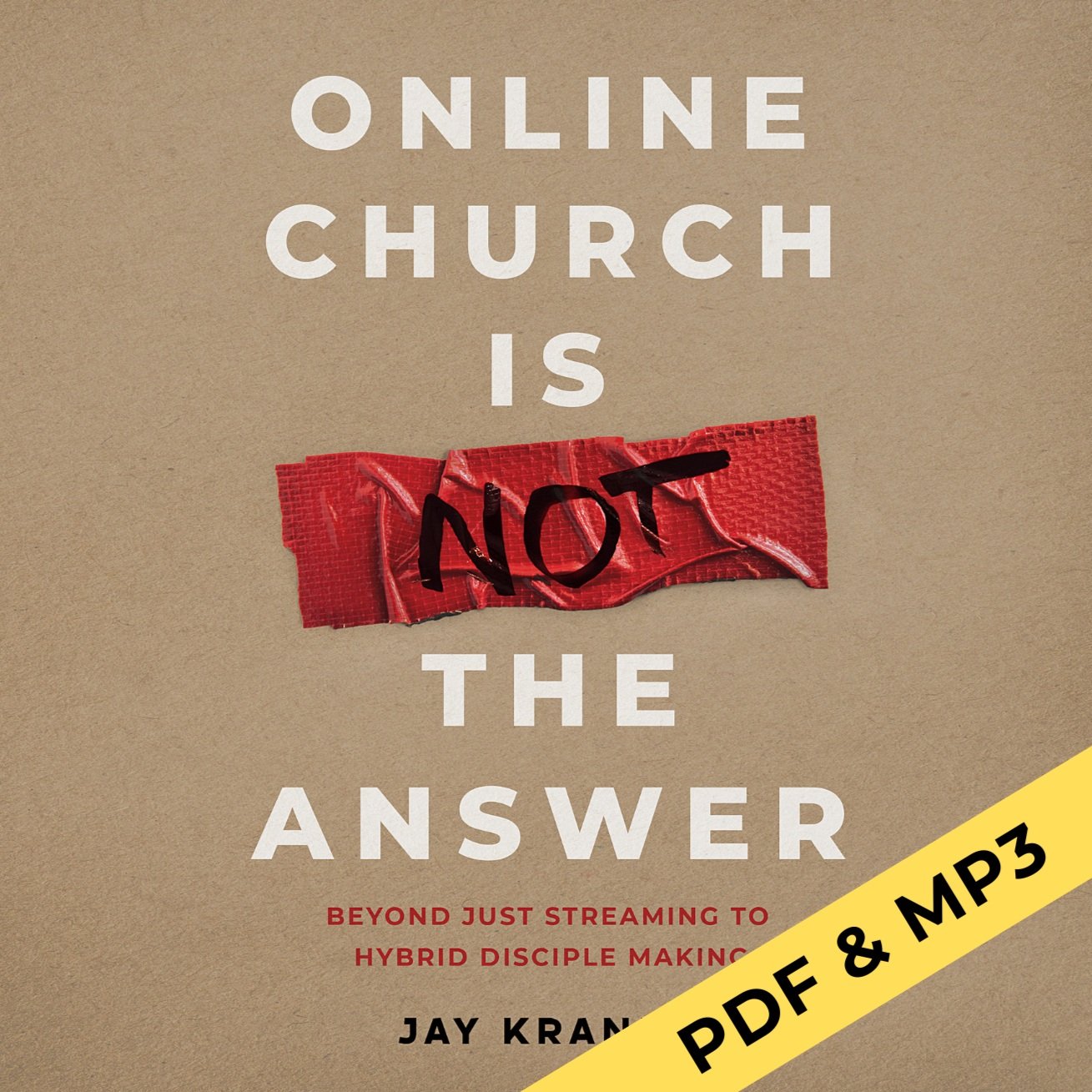
Overview of Book: Digital is a confusing concept, and many churches struggle to understand it, with most limiting their digital experience to streaming their church services and nothing more. In this book, you’ll learn how to think strategically about digital strategy and how to best integrate digital ideas into your church that align with your ministry’s in-person objectives. The goal is to disciple more people and not just get an online audience. Readers of this book will learn to cut through the hype and discern the most critical, high-level concepts and find practical ideas they can implement in their church. You’ll walk away with a vision and a pathway to take your church’s digital strategy to the next level and beyond just streaming a church service.